

The Cerne Valley & Dorset National Landscape
The Dorset Countryside Around Cerne Abbey
Cerne Abbey stands in the Cerne Valley, the chalk valley of the little River Cerne in rural Dorset. The land around it is protected as the Dorset National Landscape: open chalk downland, clear chalk streams and old stone villages, all within a few miles of the abbey gate.
It makes an easy base for the wider county. Footpaths climb straight from the valley floor, and Dorchester, Thomas Hardy's Wessex and the Jurassic Coast are all within reach of a day out.
The Cerne Valley and the Dorset National Landscape
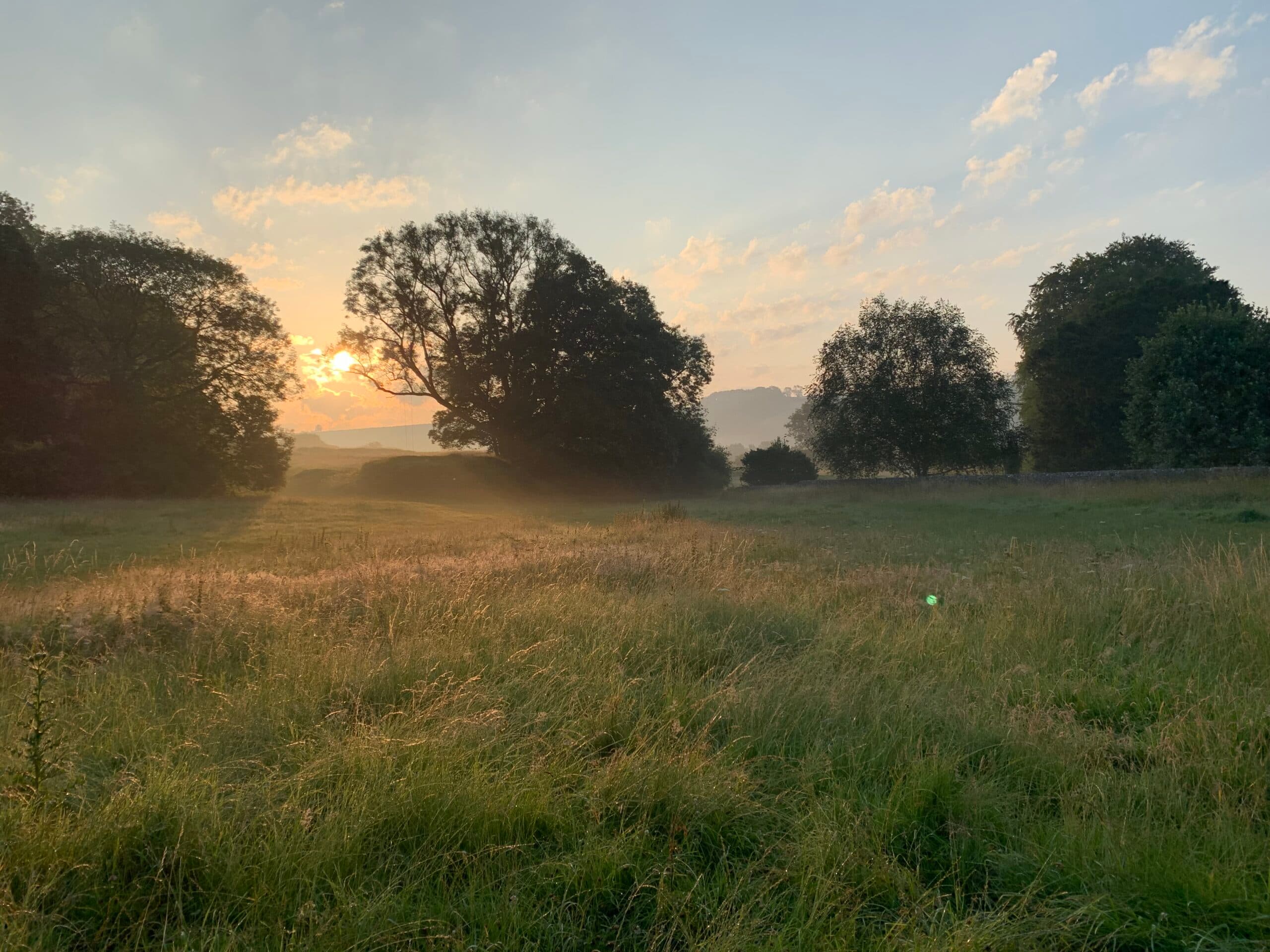
The Cerne Valley is a textbook chalk valley. The River Cerne runs along a flat green floor of water meadows, and the ground rises on either side in steep, smooth slopes broken by side-valleys, the dry coombes that fold into the downs. At the top the land opens out into wide chalk uplands.
The water gives it away. The Cerne is a chalk stream, fed from the rock and running clear and cool through most of the year. Along the valley sides there is broadleaved woodland and old hazel coppice, cut and regrown over generations.
All of this falls within the Dorset National Landscape, the protected area known for years as the Dorset Area of Outstanding Natural Beauty, or Dorset AONB. The name changed; the boundary and the protection did not. The abbey sits inside it.

Walks From the Abbey's Doorstep
This is good walking country, and many of the best walks near Cerne Abbas start within easy reach of the abbey.
If you only have time for one walk, the circular up Giant Hill is the one to do. It starts from the free car park and picnic site at Cerne Abbas Village Hall (DT2 7GY), climbs the chalk slope on signposted footpaths and bridleways for the wide valley views, and comes back down past the viewpoint that looks across to the Giant. It is around two and a half to three miles, with one steady climb, and takes a couple of hours at an easy pace.
The Cerne Valley Way is a 26-mile circular route along the River Cerne, running through Minterne Magna, Cerne Abbas, Nether Cerne, Godmanstone, Forston and Charminster. It is waymarked with a buzzard disc, and you do not have to walk the whole loop; the sections between the villages make good half-day outings.
For something longer, the Wessex Ridgeway passes through Cerne Abbas on its way across the county, a 136-mile long-distance path from Marlborough in Wiltshire down to Lyme Regis on the coast, holding to the high ground for much of the way.
For something wilder, the Dorsetshire Gap lies up on the high ground to the north-east, a meeting of old sunken trackways that was once a busy junction for travellers and droved livestock and is now a quiet, atmospheric spot well off the beaten track. It falls on Ordnance Survey Explorer map 117, aptly titled Cerne Abbas and Bere Regis, the sheet to carry for walking this country.
Up on the tops the downland opens out, and the same hillside carries the Giant. Above the figure sits the Trendle, an Iron Age earthwork still used by the village Morris dancers for May Day, and the open slope is rare chalk grassland of national and European importance for its wild flowers and insects. For opening times, parking and admission before you set out, see planning your visit.
Villages and Hamlets of the Valley
Small chalk-and-flint villages are strung along the valley and the lanes around it. Cerne Abbas is the largest; our village guide covers its pubs, shop and church. A few others are worth seeking out.
Sydling St Nicholas
A long village in the next valley west, strung out along the Sydling Water, a chalk stream of its own.
Up Cerne
A hamlet just north of Cerne Abbas, known for the much-photographed view of Up Cerne House and its church across the pond.
Nether Cerne
A tiny place on the River Cerne, little more than a church, a farm and a former manor on the valley floor.
Godmanstone
A small village downstream, home to the Smith's Arms, reputed to be one of the smallest pubs in England.
Minterne Magna
A hamlet at the head of the valley and a waypoint on the Cerne Valley Way.
Nature in the Valley
The chalk is what makes the wildlife here special. On the unploughed slopes and the tops, the chalk downland carries chalk grassland, a habitat that is internationally important because so little of it survives; a single square metre can hold dozens of different flowering plants and grasses. The downland around the Giant is in the care of the National Trust, which has extended the land it looks after here, including around 340 acres acquired to restore the chalk grassland and the wildlife it supports.
Hilfield Hill, on the high ground north-west of Cerne Abbas, is a Local Nature Reserve and a good place to see this downland country at close range. Lower down, the River Cerne brings the life of a clear chalk stream to the valley floor, while the open ridgeways give long views out across the National Landscape in every direction.
Wildlife and the Countryside Code
The chalk grassland comes alive with wild flowers from late spring through summer. Look up and you will often see buzzards circling over the slopes; in summer skylarks sing above the open fields, and the chalk stream below keeps its own life along the banks and in the water.
This is working farmland as well as protected landscape, so the Countryside Code matters. Keep to the paths and bridleways, leave gates as you find them, take your litter home, and keep dogs on leads around livestock and ground-nesting birds.
Beyond the Valley: Exploring Dorset
Widen the map and there is plenty more within reach, with the abbey a handy base for all of it.
Dorchester, the county town, sits about 7 miles south on the A352. It began as the Roman town of Durnovaria, and today it keeps a regular market and the county museum, which tells the story of the area from prehistory onward.
This is Thomas Hardy's Wessex. Hardy was born just outside Dorchester at Hardy's Cottage and later built and lived at Max Gate in the town; both are now looked after by the National Trust.
There is a second Hardy on the Dorset skyline, and the two are easily confused. South-west of Dorchester, on the bare top of Black Down, stands the Hardy Monument: not a memorial to the novelist but to Vice-Admiral Sir Thomas Hardy, Nelson's flag captain at Trafalgar and the ‘Kiss me, Hardy’ of the Admiral's dying words. Built in 1844 and looked after by the National Trust, it sits on the South Dorset Ridgeway with a free car park and long views out over the Jurassic Coast.
Just south of Dorchester stands Maiden Castle, one of the largest Iron Age hillforts in Europe, a vast set of grass ramparts in the care of English Heritage. Further south again is the Jurassic Coast, the World Heritage shoreline of fossil beaches and sea-cut rock at Lyme Regis, Durdle Door and Lulworth. Check each place's own site for opening times and parking before you go.
To the north, the abbey town of Sherborne makes an easy day out in the other direction, with its great medieval abbey church and Sherborne Castle, built by Sir Walter Raleigh in 1594 and home to the Digby family since the early seventeenth century. Check each place's own website for opening times before you go.
Walks Near Cerne Abbas FAQs
What are the best walks near Cerne Abbas?
The circular up Giant Hill from the Cerne Abbas Village Hall car park is the classic short walk. The waymarked Cerne Valley Way links the valley villages, and the Wessex Ridgeway passes through on its way across the county.
Is the Cerne Abbas Giant walk difficult?
The Giant Hill circular is around two and a half to three miles with one steady climb, taking a couple of hours at an easy pace. Paths can be uneven, so wear suitable footwear.
Where do you park for walks around Cerne Abbas?
There is a free car park and picnic site at Cerne Abbas Village Hall (DT2 7GY), and parking at Kettle Bridge Lane.
What is the Dorset National Landscape?
The protected area formerly known as the Dorset Area of Outstanding Natural Beauty, or Dorset AONB. The name changed but the boundary and protection did not, and Cerne Abbey sits within it.
Which OS map covers Cerne Abbas?
Ordnance Survey Explorer map 117, titled Cerne Abbas and Bere Regis.

A Base for Your Stay
Staying at the abbey puts all of this on your doorstep: the valley walks, the chalk downland and the wider county are within easy reach of the grounds. There is accommodation within the estate for visitors who want more than a day, and our visitor information covers what you need to plan the trip.
The same scenery that brings walkers to the valley also makes the estate a sought-after setting for weddings, private events and filming.